How Do State Boards Define Engineering Ethics? Understanding the Engineer’s Role and Ethics in Engineering
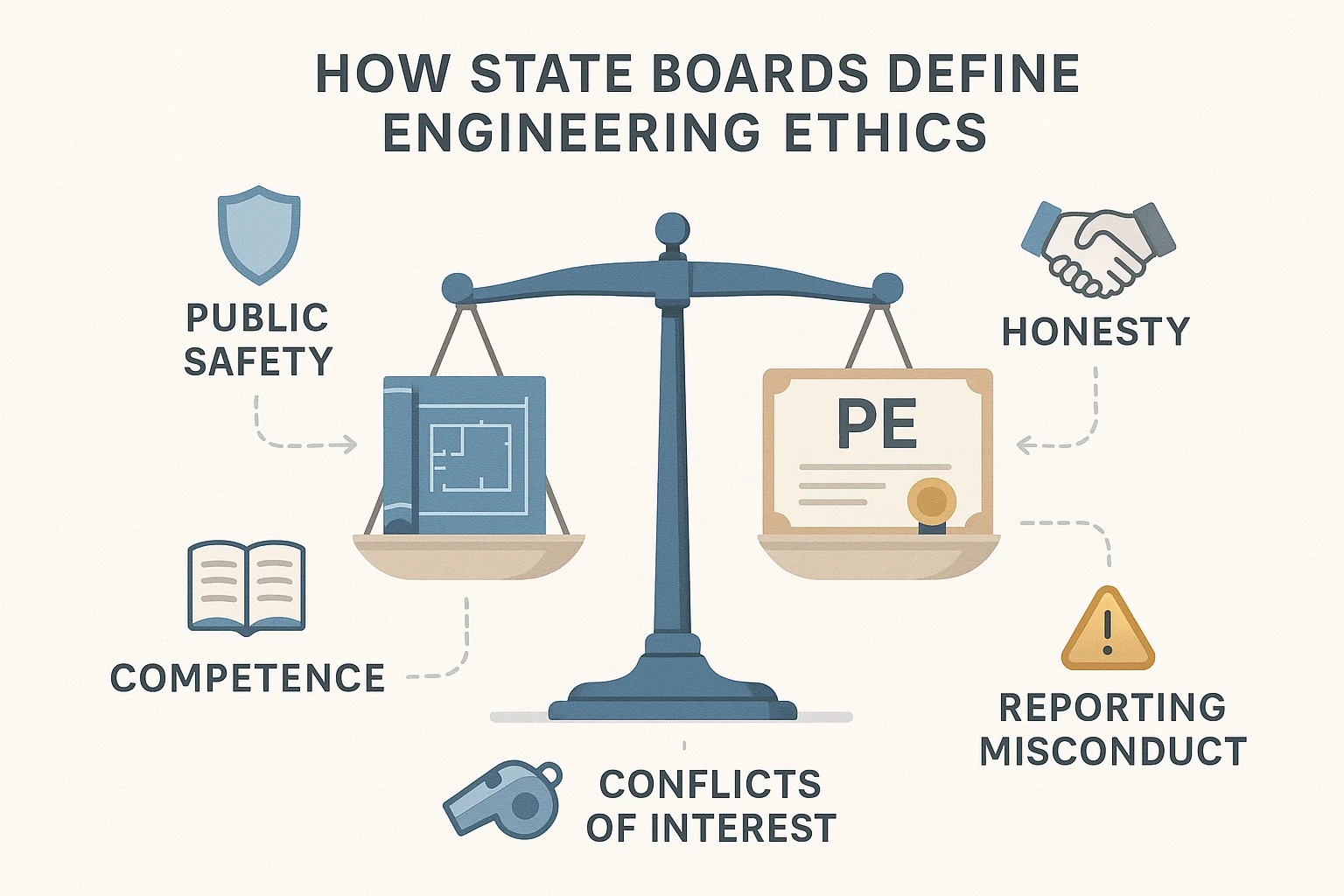
State boards define engineering ethics through laws, rules, professional conduct standards, licensure duties, and continuing education requirements. The language may vary by state, but the purpose is similar across the profession: engineers must protect public safety, practice within their competence, communicate honestly, avoid conflicts of interest, and follow the rules that govern professional engineering.
For licensed engineers, ethics is not only a personal value. It is part of lawful practice. A state board may use ethics rules to evaluate complaints, review discipline cases, approve continuing education, and decide whether a professional engineer has met the conduct expected of a licensee.
PDH-Pro helps engineers understand these expectations through online ethics courses, live webinars, and state-specific PDH options. Whether you are renewing a PE license, managing compliance for a team, or reviewing board standards before a project, ethics training can help you stay current and prepared.
Professional Ethics and State Board Authority
State engineering boards are created by law to regulate the practice of engineering. Their authority usually includes licensing qualified applicants, setting renewal requirements, adopting rules, reviewing complaints, and taking action when professional conduct falls below board standards.
Engineering ethics are often defined through several sources at once. A board may rely on state statutes, administrative rules, board policies, disciplinary decisions, and professional codes. Many engineers also use the NSPE Code of Ethics, ASCE guidance, IEEE standards, or other professional codes as reference points, but state board rules control licensure obligations.
The board’s definition of ethics usually centers on public protection. Engineers are expected to place public safety, health, property, and welfare ahead of personal gain, employer pressure, or client preference. That expectation shapes many other duties, including honesty in reports, proper use of the engineer’s seal, responsible charge, competence, confidentiality, and disclosure of conflicts.
Because rules vary by jurisdiction, engineers licensed in multiple states need to review each board’s requirements. One state may describe ethics through a professional conduct rule. Another may define unethical behavior through prohibited acts. Another may require ethics continuing education as part of license renewal. The words may differ, but the conduct expectations often overlap.
PDH-Pro supports engineers by offering ethics courses that explain how professional standards apply to real decisions. Training helps bridge the gap between rule language and daily practice.
Professional Conduct Standards for Engineers
State boards often define ethics by describing what professional conduct should look like. These standards tell engineers how to act when they prepare documents, supervise work, sign and seal plans, communicate with clients, disclose limitations, or respond to safety concerns.
Professional conduct rules may address:
- Practicing only within areas of competence.
- Holding public safety and welfare above private interests.
- Providing truthful statements and accurate reports.
- Avoiding deceptive acts or misleading qualifications.
- Disclosing conflicts of interest.
- Maintaining confidentiality when required.
- Cooperating with board investigations.
- Following laws, rules, codes, and applicable standards.
- Taking responsibility for work under responsible charge.
- Avoiding conduct that damages public trust in the profession.
These rules matter because engineering work often affects people who never see the design process. The public depends on professional engineers to make sound decisions before a bridge opens, a drainage system is approved, a building component is installed, or an electrical system goes online.
A state board may also define unprofessional conduct as any practice that violates statutes, board rules, or accepted professional obligations. That means an ethics issue can arise even when no physical failure occurs. Misleading a client, sealing work without review, failing to report a known hazard, or practicing outside one’s scope can become board matters.
Ethics training helps engineers recognize these conduct risks early. PDH-Pro’s online courses use practical scenarios and case-based learning to help licensees apply board expectations in real project settings.
Engineering Ethics Across States and Licensure Rules
Although most states share similar ethics themes, the details can differ. Some states require a specific ethics course during each renewal cycle. Others fold ethics into general continuing education. Some states require state-specific laws and rules training, while others place more weight on technical competence, reporting duties, or board-approved providers.
For engineers, this means compliance requires more than selecting a general course. A licensee should confirm the current board rule, renewal cycle, accepted course formats, documentation requirements, and whether the course must be live, timed, monitored, or provider-approved.
The table below shows how boards often connect ethics to licensure.
| Board Focus Area | What It Usually Means for Engineers | Why It Matters |
| Public safety | Engineers must prioritize health, safety, property, and welfare | Protects communities and preserves trust |
| Competence | Engineers should work within their education and experience | Reduces risk from unqualified practice |
| Honesty | Reports, applications, and professional statements must be truthful | Supports reliable decision-making |
| Conflicts of interest | Personal or financial interests must be disclosed | Protects objectivity and fairness |
| Responsible charge | Engineers must properly supervise and review work they approve | Connects accountability to licensed practice |
| Continuing education | Licensees may need ethics, laws, rules, or technical PDH | Keeps professional knowledge current |
| Discipline | Boards may investigate complaints and sanction violations | Enforces standards across the profession |
In Florida, engineering practice is governed through Chapter 471, Florida Statutes, and Chapter 61G15, Florida Administrative Code. Florida PEs also have continuing education obligations that include professional ethics. Other states use their own statutes and rules, so engineers should always check the board where the license is held.
PDH-Pro helps engineers manage multi-state obligations by offering ethics and professional development courses that support renewal planning. Engineers can select training that fits their board requirements and keep completion records ready for audits or license renewal.
Compliance, Complaints, and Board Investigations
Engineering ethics becomes especially visible when a complaint is filed. State boards may investigate allegations involving unsafe work, fraud, negligence, improper sealing, misleading statements, conflicts of interest, or other conduct that could violate engineering regulations.
Boards do not treat every allegation the same way. They may screen complaints, request records, ask for written responses, consult technical experts, or hold hearings, depending on the state’s process. The board’s role is to determine whether the conduct violated statutes, rules, or professional standards.
For engineers, the best protection is not fear of discipline. It is a consistent practice of clear documentation, honest communication, and careful decision-making. If a board ever reviews a matter, records may show what the engineer knew, what was reviewed, what concerns were raised, and how decisions were made.
Ethical compliance habits include:
- Keep project records organized and complete.
- Document design assumptions, decisions, and review steps.
- Communicate safety concerns in writing when needed.
- Disclose conflicts before they affect decisions.
- Avoid signing or sealing work without proper review.
- Confirm that continuing education satisfies board rules.
- Save course certificates and renewal records.
- Review state board updates before each renewal cycle.
These habits help engineers maintain licensure and reduce avoidable risk. They also support stronger project delivery because ethical practice improves transparency and accountability.
PDH-Pro ethics courses can help engineers understand common complaint themes, board expectations, and practical ways to stay aligned with professional conduct rules. The training is useful for individual licensees and firms that want to build a stronger compliance culture.
Continuing Education and Ethics Training
Many boards include ethics in continuing education because professional judgment needs regular attention. Engineers may know the rules, but project pressure, new technology, management demands, and changing standards can create situations where ethical decisions are less obvious.
Ethics education gives engineers time to revisit professional duties before a problem arises. Courses may cover conflicts of interest, competence, confidentiality, responsible charge, public safety, case studies, disciplinary examples, professional codes, and state-specific conduct rules.
For Florida PEs, professional ethics is part of the required continuing education mix. Engineers in other states should check their own board rules to confirm whether ethics training is required, how many PDH hours count, and what documentation must be saved.
PDH-Pro offers live and on-demand ethics courses that help engineers meet renewal needs while learning how board definitions apply in practice. Online formats are useful for busy professionals who need flexible access, fast documentation, and training that fits around project demands.
When selecting an ethics course, engineers should confirm:
- The course is designed for professional engineers.
- The PDH value is clearly stated.
- The course content matches the board’s ethics requirement.
- The provider issues a completion certificate.
- The completion date falls within the renewal period.
- The course format is accepted by the state board.
- The records can be saved for audit or review.
Ethics training should not be treated as a last-minute renewal task. The best value comes when engineers use it to strengthen judgment, prevent mistakes, and improve how they manage real project decisions.
Use State Board Guidance and PDH-Pro to Stay Ready
State boards define engineering ethics through licensure rules, professional conduct standards, disciplinary authority, continuing education requirements, and public safety duties. While wording varies among states, the shared message is clear: engineers must practice with honesty, competence, accountability, and respect for public welfare.
Engineers should review their state board’s current rules before renewal, track ethics and technical education, and keep clear documentation. Firms should also encourage licensed staff to understand board expectations, especially around sealing, responsible charge, conflicts, and safety reporting.
PDH-Pro gives engineers a practical way to stay current with ethics training and professional development. Choose an online or live ethics course, save your certificate, and build a renewal plan that supports both compliance and better engineering practice.