
The Importance of CEU for Professional Growth
Continuing education units help architects stay licensed, current, and ready for the next stage of their careers. Engineering standards change, state boards update requirements, and new technologies reshape daily practice. The importance of CEU for professional growth becomes clear when education is treated as a career tool, not just a renewal task.
The right courses help engineers maintain compliance, strengthen technical judgment, build confidence, and show a steady commitment to lifelong learning. For professionals comparing discipline-specific options, PDH-Pro also supports architectural continuing education alongside engineering-focused training. With online programs from PDH-Pro, engineers can earn PDH credits in a flexible format that supports both license renewal and long-term development.
How CEUs Support Continuing Education and Career Growth
CEUs give architects a structured way to document learning. They show that a licensed professional is staying current with accepted practices, regulations, ethics, and technical topics that affect public health and safety. For many engineers, that record is also tied directly to state license renewal.
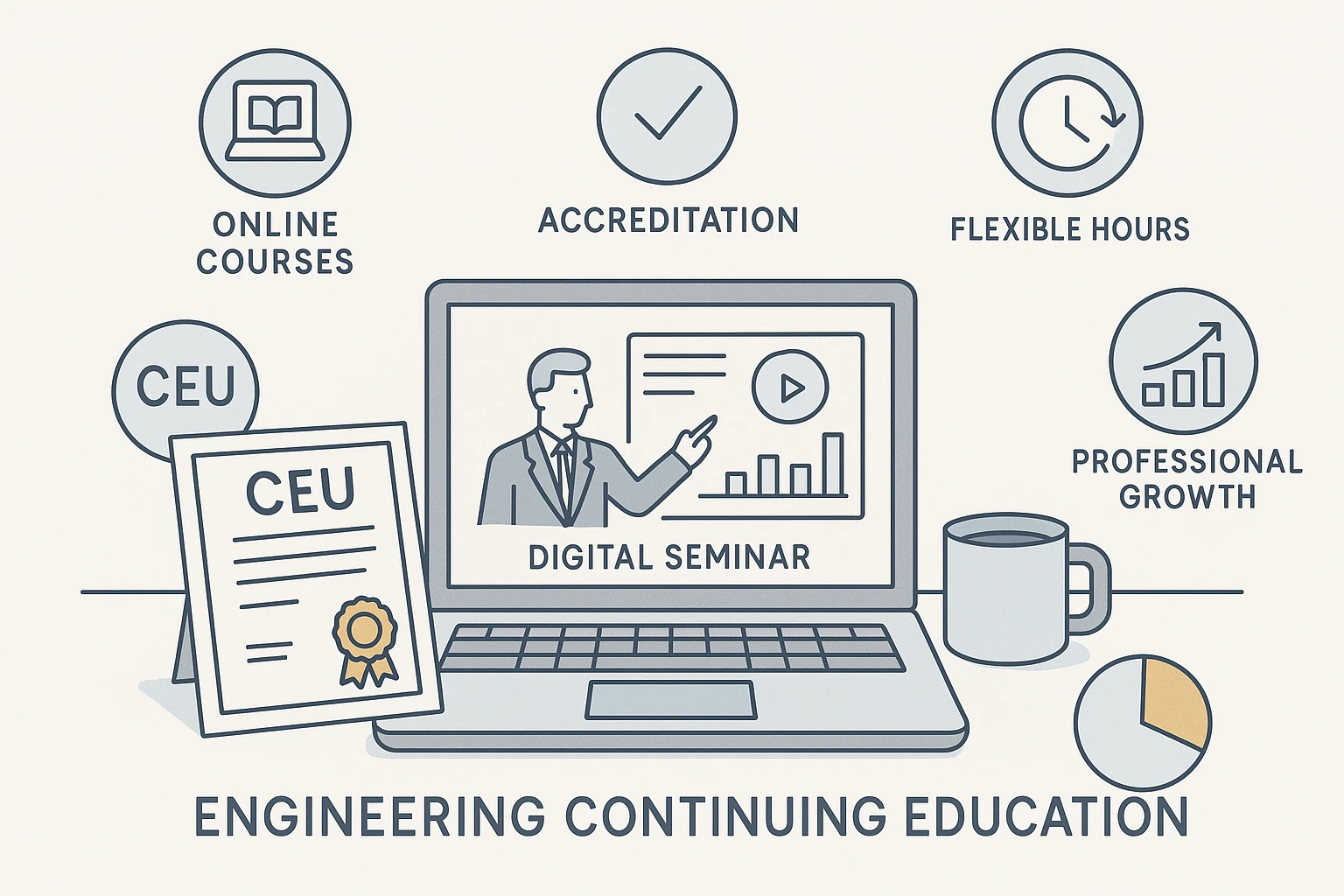
Professional development works best when it has a purpose. A civil engineer may focus on stormwater design, pavement systems, or construction safety. An electrical engineer may choose courses in power systems, arc flash hazards, or energy storage. A mechanical engineer may look for training in HVAC, controls, or equipment reliability. Each path can support the same broader goal, which is to keep knowledge useful and relevant.
Continuing education also supports career growth because it helps engineers respond to changing job demands. A professional who learns new codes, design methods, and project management practices is better prepared to take on added responsibility. That can lead to stronger performance reviews, better project outcomes, and a stronger case for getting promoted.
CEUs also help architects protect their professional standing. State boards may ask for proof of completed education during renewal or audit periods. Having accurate certificates and a clear record of completed courses reduces stress and helps professionals stay organized.
For architects who want education that fits real schedules, PDH-Pro offers online PDH courses, live webinars, and training options designed around license requirements. Courses are built for professional engineers who need practical learning, PDH credits designed to meet state engineering board requirements, and documentation they can access when they need it.
Choosing Learning Options That Fit Engineering Work
The best continuing education plan depends on schedule, state requirements, learning style, and career goals. Some engineers want to finish credits quickly before renewal. Others prefer to spread courses across the year so learning stays steady and manageable. Online formats make both approaches possible.
| Learning Format | Best Fit | Main Benefit |
| Self-paced online courses | Engineers with changing project schedules | Complete training when time allows |
| Live webinars | Engineers who need interactive or timed instruction | Ask questions and learn in a scheduled format |
| On-demand webinars | Engineers who want recorded expert instruction | Access training without waiting for a live date |
| State PE renewal packages | Engineers renewing a PE license | Align course planning with board rules, ethics topics, and renewal needs |
| Technical course packages | Engineers building depth in one discipline | Organize related credits around career goals |
Self-paced courses are often the most convenient choice for architects balancing deadlines, client meetings, site visits, and design reviews. They allow professionals to pause and return to training without losing progress.
Live webinars add a different value. They create a scheduled learning environment and may satisfy state rules that require live, interactive, timed, or monitored instruction. They also help engineers learn from questions raised by peers.
On-demand training works well for professionals who want the structure of a recorded presentation with the flexibility of online access. Architects can use these courses to review focused topics, fill credit gaps, or build knowledge in areas tied to current projects.
The strongest learning plans often combine formats. An architect may use self-paced courses for most credits, then add a live ethics webinar or a state-specific course before renewal. That mix keeps education efficient without making it feel rushed.
Turning Education into Career Advancement
CEUs are most useful when engineers choose courses with intention. License renewal may be the immediate reason for taking a course, but the subject matter can also support career advancement. A thoughtful course plan helps engineers improve individual skills while building a stronger knowledge base over time.
Course selection should start with a simple question: What skills will make your work better this year? For some architects, the answer is technical depth. For others, it may be leadership, project delivery, code updates, risk management, or ethics.
Strong CEU choices often support one or more of these goals:
- Build technical knowledge in your current engineering discipline
- Prepare for new project types, roles, or client needs
- Meet state-specific education and ethics requirements
- Strengthen leadership, communication, and project judgment
- Keep certificates organized for license renewal or audit requests
Continuing education increases earning potential when it helps professionals qualify for higher-value work, support larger projects, or move into leadership roles. It can also increase your chances of standing out in a competitive workplace. Employers often value engineers who show initiative, maintain current training, and bring updated knowledge back to their teams.
Education also supports confidence. Architects make decisions that affect budgets, schedules, infrastructure, and public safety. Current training helps professionals evaluate risks, apply standards, and communicate recommendations with greater clarity.
PDH-Pro’s course catalog, state renewal packages, and licensing resources help engineers select learning opportunities by topic, discipline, renewal requirement, or credit need. That flexibility makes it easier to connect required education with real career goals rather than treating CEUs as a last-minute task.
Staying Compliant with State-Specific and Ethics Requirements
Architectural license renewal rules vary by state. Some boards require a set number of PDH credits each renewal cycle. Others require specific topics, such as ethics, laws and rules, or health and safety. Some states also have limits on carryover credits or rules about acceptable course formats, including live, interactive, timed, or monitored training in certain states.
That variation is one reason engineers need reliable continuing professional education. A course that works for one state may not satisfy another state’s rules. Architects licensed in multiple states need to be even more careful because they may need to track different deadlines, topics, and documentation requirements.
A practical CEU plan should account for:
- Renewal deadline and reporting period
- Total PDH or CEU requirement
- Ethics, laws, rules, or state-specific topics
- Live, interactive, timed, or monitored course rules
- Certificate storage and audit documentation
Ethics courses deserve special attention. Ethics is not limited to abstract principles. It affects real decisions about safety, public welfare, conflicts of interest, professional responsibility, and honest communication. A strong ethics course helps architects recognize situations where judgment matters as much as technical skill.
State-specific education can also make license renewal easier. Instead of guessing whether a course applies, engineers can use PDH-Pro’s state renewal packages and licensing resources to choose training that aligns with state board expectations. That saves time and reduces the risk of discovering a gap close to the renewal date.
PDH-Pro supports this process with board-focused online courses, state licensing resources, and certificates of completion. For architects managing heavy workloads, that combination helps keep compliance on track without pulling attention away from clients and project delivery.
Why CEUs Matter for Health, Safety, and Professional Judgment
Architectural work affects people every day. Roads, bridges, buildings, water systems, power systems, manufacturing facilities, and healthcare infrastructure all depend on sound decisions. Continuing education helps architects keep those decisions grounded in current standards, proven methods, and responsible practice.
Health and safety topics are especially valuable because they connect learning to real-world outcomes. A course on fire protection, hazardous materials, wastewater treatment, electrical safety, or structural performance can influence how an engineer reviews plans, manages risk, or responds to field conditions.
CEUs also help architects keep up with emerging topics. New materials, energy systems, environmental rules, digital tools, and resilience planning all change how projects are designed and maintained. Engineers involved in building and site design may also benefit from green roof planning concepts that connect sustainability, stormwater management, and long-term building performance. Continuous learning helps you acquire new skills while reinforcing the principles that protect public health.
Professional judgment grows through experience, but training sharpens it. Architects who regularly study codes, case studies, failures, ethics, and best practices are better prepared to identify warning signs and make sound recommendations. That matters in design offices, job sites, public agencies, consulting firms, and operations teams.
Documentation plays a role here too. A certificate does not replace judgment, but it proves that an engineer has completed relevant education. During audits, renewals, or employer reviews, clear records show a pattern of steady development.
PDH-Pro courses are designed for licensed architects who need education that is practical, accessible, and tied to professional responsibility. With expert-led instruction and a wide range of topics, engineers can use CEUs to support safer work, better decisions, and stronger long-term performance.
Build Your Next CEU Plan with PDH-Pro
A strong CEU plan gives architects control over license renewal and professional growth. Instead of rushing to find credits near a deadline, you can choose courses that support your current role, future goals, and state requirements. That approach turns continuing education into a steady part of career development.
PDH-Pro helps licensed architects make that process simpler. With online PDH courses, live webinars, on-demand webinars, timed and monitored options, state renewal packages, and certificates of completion, you can earn credits in a format that works with your schedule.
Use your next renewal cycle as a chance to build knowledge that supports your work. Choose topics that strengthen your technical skills, refresh your understanding of ethics, and prepare you for the responsibilities ahead. When you’re ready to plan your next course, PDH-Pro offers a practical way to stay compliant, keep learning, and move your engineering career forward.