
Florida requires engineering laws and rules because licensed engineers make decisions that affect public health and safety, property, infrastructure, businesses, and the daily lives of residents. A bridge, roadway, drainage plan, structural design, electrical system, environmental solution, or public utility project can carry serious risk when it is planned, signed, sealed, or supervised without clear professional standards.
A common question is why does Florida require engineering laws and rules when engineers already complete education, exams, and licensure steps. The reason is accountability. The state uses laws, rules, continuing education requirements, and enforcement to define who may practice engineering, how a professional engineer must handle documents, what conduct can lead to discipline, and how license renewal works.
For Florida professional engineers, knowing the rules is part of responsible practice. It helps protect the public, supports ethical decision-making, and reduces the risk of errors that can damage a license, project, or business. PDH-Pro helps engineers stay current with Florida Laws and Rules training, ethics education, and online continuing education that supports renewal and day-to-day compliance.
Florida Professional Engineering Rules Protect the Public
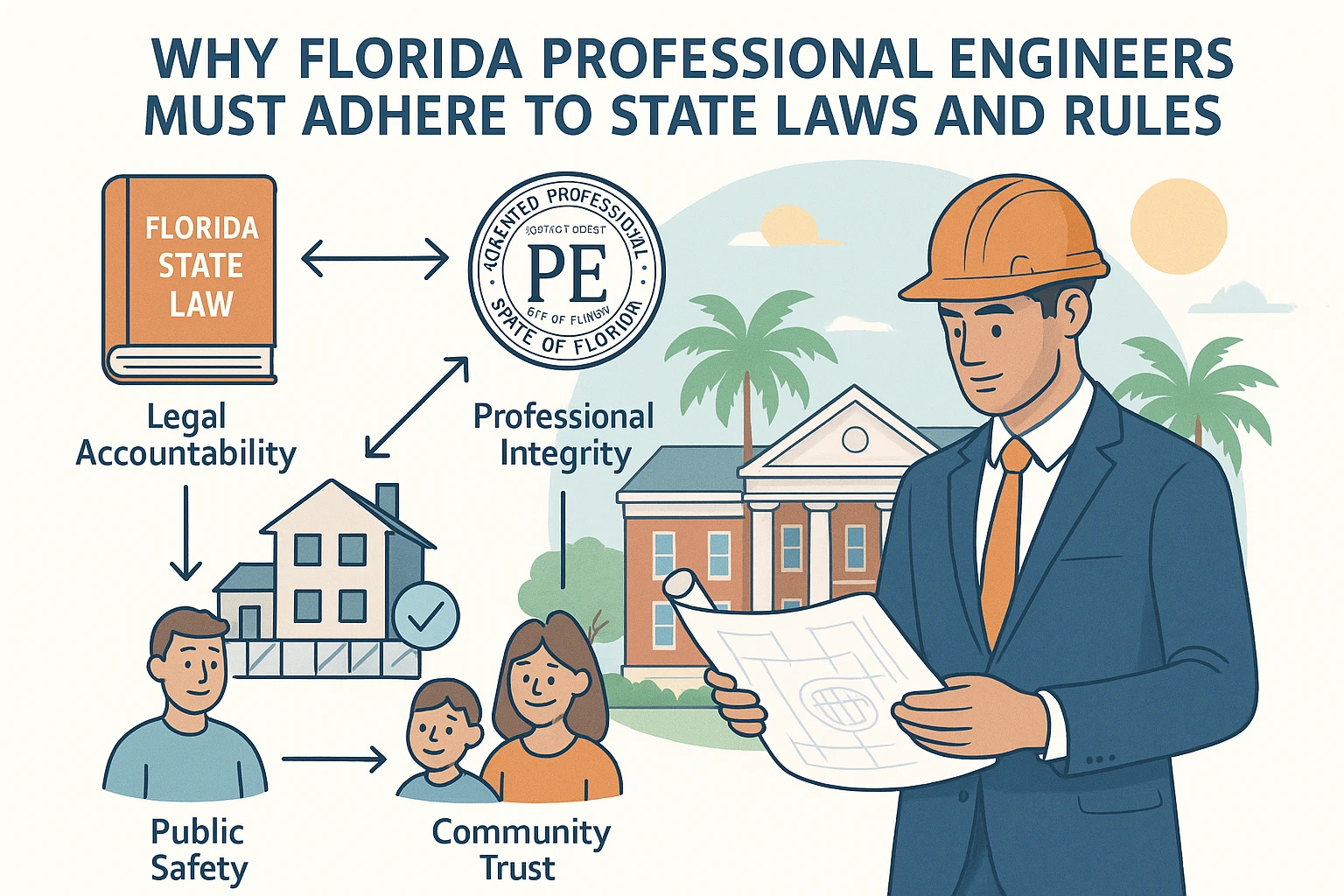
Engineering is regulated because the work has a direct connection to safety, reliability, and public trust. The state does not treat engineering as an ordinary business service. It treats professional engineering as a licensed practice because engineering judgment can affect buildings, transportation systems, water resources, energy systems, industrial facilities, environmental controls, and many other areas where mistakes may cause harm.
Florida statutes create the legal foundation for this oversight. The Florida Board of Professional Engineers applies the rules regulating the profession and helps ensure that only qualified individuals and firms offer engineering services. These rules give the state board a way to review qualifications, issue licenses, set renewal requirements, and respond when professional conduct falls below required standards.
For engineers, these laws provide a clear framework. They define the practice of engineering, explain licensure expectations, outline disciplinary authority, and describe responsibilities tied to professional work. Without these standards, clients and the public would have a harder time knowing whether engineering services are being performed by someone qualified, accountable, and subject to enforcement.
Florida engineering rules also support consistency. A professional engineer working in one part of the state must meet the same basic legal and ethical expectations as a professional engineer working elsewhere in Florida. That consistency matters for public agencies, private clients, firms, contractors, and residents who rely on engineering work.
The public does not usually see every calculation, code review, inspection report, or design decision behind a finished project. Laws and rules help create trust that licensed professionals are following recognized standards before a project reaches the public.
For working engineers, the practical takeaway is simple: law compliance is not separate from professional practice. It shapes how engineers review work, communicate risk, sign and seal documents, supervise teams, manage records, and choose continuing education.
Florida Statutes and Board Requirements for Engineers
Florida statutes and administrative rules work together. Chapter 471, Florida Statutes, provides the legal authority for engineering regulation. Chapter 61G15 of the Florida Administrative Code contains the rules adopted for the Board of Professional Engineers. Together, these sources explain how the profession is licensed, regulated, and renewed.
A professional engineer does not need to memorize every line of these documents, but they should know where to find them and how they apply to daily work. The rules may affect a licensee’s responsibilities when preparing documents, supervising staff, using an engineering seal, renewing a license, or responding to a complaint.
Common areas covered by the laws and rules include:
- Licensure standards for applicants and professional engineers.
- Continuing education requirements for renewal.
- Signing and sealing requirements for engineering documents.
- Disciplinary procedures for violations and complaints.
- Firm responsibilities when offering engineering services.
- Professional conduct expectations tied to safe and ethical practice.
- Recordkeeping responsibilities related to professional work and education.
These rules matter because they create accountability. If an engineer signs a document, supervises work, or offers engineering services, the state can look to the applicable law and board rules to determine whether the work met professional requirements.
Firms also need to pay attention. Engineering businesses should train staff on current rules, maintain accurate license records, review document control procedures, and make sure employees understand when licensed oversight is required. The risk of noncompliance is not limited to one person. Poor internal procedures can create problems across projects, teams, and client relationships.
For individual engineers, familiarity with Florida laws supports better professional judgment. When a project raises a question about supervision, sealing, scope of responsibility, or client pressure, the rules provide a reference point. They help engineers choose the safer, more defensible path.
PDH-Pro supports those needs by offering Florida-focused education that helps engineers understand the state’s expectations in plain language. A strong Laws and Rules course does not replace official sources, but it can help professional engineers connect legal requirements to real decisions they face in practice.
How Laws and Rules Shape Engineering Practice
Florida’s engineering laws affect much of what engineers do, even when the work feels routine. They guide how professional services are offered, how documents are prepared, how a responsible charge is understood, and how the engineer’s seal should be used.
The seal is one of the clearest examples. When a professional engineer signs and seals engineering documents, the seal signals responsibility, authenticity, and accountability. It tells clients, authorities, and the public that the work has been prepared under the appropriate professional standard and is tied to a licensed engineer.
That responsibility should not be treated lightly. Signing and sealing documents without proper review, supervision, or authority can create legal and professional consequences. It can also place the public at risk if the work contains errors that were not properly checked.
The same principle applies to engineering judgment. Laws and rules help reinforce that engineers must put public welfare ahead of convenience, pressure, or cost-saving shortcuts. Clients may ask for fast revisions, reduced review, or a design decision that creates concern. A clear understanding of professional obligations helps an engineer respond with confidence.
Florida rules also affect how engineers and firms manage records. Accurate documentation can show who prepared the work, who reviewed it, when decisions were made, and what standards were followed. This becomes especially important if a complaint, project dispute, audit, or board inquiry arises.
The table below shows how Florida laws and rules connect to practical responsibilities.
| Practice Area | What the Rules Support | Why It Matters |
| Licensure | Confirms who may offer professional engineering services | Protects the public from unqualified practice |
| Sealing | Connects documents to a responsible professional engineer | Supports accountability and document authenticity |
| Continuing education | Keeps engineers current on law, ethics, and technical topics | Supports safer decisions and license renewal |
| Firm compliance | Helps businesses maintain proper professional procedures | Reduces risk across projects and teams |
| Enforcement | Gives the board authority to address violations | Protects public trust in the profession |
| Recordkeeping | Preserves proof of decisions, education, and project history | Helps during audits, disputes, and reviews |
These requirements are not meant to slow engineers down. They are meant to create a safer professional environment where technical work is reviewed, documented, and performed by qualified people.
For engineers who manage busy schedules, PDH-Pro can help keep continuing education organized. Online courses make it easier to complete required training while maintaining project commitments. Certificates and course records also support documentation needs during renewal.
Laws, Ethics, and Continuing Education Requirements
Florida’s continuing education requirements exist because engineering practice changes. Codes are updated, technologies evolve, professional risks shift, and rules are revised. Continuing education gives professional engineers a structured way to stay informed while maintaining an active license.
Florida professional engineers must complete 18 continuing education hours during each renewal cycle. The required education includes Florida Laws and Rules, professional ethics, area-of-practice training, and additional hours related to engineering practice.
The Laws and Rules requirement is especially important because it focuses on the legal framework that governs the profession in Florida. Engineers may already understand technical design, but legal obligations require a different kind of awareness. A Laws and Rules course helps licensees review expectations tied to statutes, board rules, professional responsibility, renewal, enforcement, and public protection.
Ethics education also plays a major role. Rules and ethics topics help engineers think through conflicts, professional judgment, public welfare, client pressure, and responsibility for work. Technical skill alone is not enough when a decision affects safety or public trust. Ethical awareness helps engineers apply their knowledge responsibly.
Continuing education supports several goals:
- Maintaining licensure by meeting board renewal requirements.
- Reducing compliance risk through current awareness of laws and rules.
- Improving professional judgment in situations involving safety or responsibility.
- Supporting technical growth through area-of-practice coursework.
- Preparing for audits with accurate records and completion certificates.
PDH-Pro helps engineers meet these requirements with online Florida PE courses, including Laws and Rules and ethics options. Courses are designed for working professionals who need clear instruction, flexible access, and documentation they can keep with renewal records.
Engineers should not wait until renewal is close to begin coursework. Planning early gives licensees time to choose relevant training, complete requirements without rushing, and keep records organized. For firms, a planned education calendar can help multiple engineers stay on track before deadlines create pressure.
Compliance Helps Protect Licenses, Firms, and Communities
Compliance is often discussed as a license requirement, but its value is broader. Following the laws and rules protects engineers, firms, clients, and communities. It reduces the chance of preventable mistakes and gives professionals a clear basis for decisions when situations become complicated.
A professional engineer who understands Florida regulations is better prepared to identify risk. That may include recognizing when work requires a licensed engineer, when a seal is appropriate, when supervision is insufficient, or when a client request conflicts with professional standards.
Firms benefit from the same awareness. A company that trains staff, monitors license status, and maintains clear document procedures is less likely to face delays, complaints, or avoidable project problems. Strong compliance habits can also improve client confidence because they show that the firm takes professional responsibility seriously.
Common compliance habits include:
- Checking the Florida Board site for rules and updates.
- Reviewing Chapter 471 and Chapter 61G15 when legal questions arise.
- Keeping continuing education certificates organized.
- Confirming license status before renewal deadlines.
- Training staff on signing, sealing, and document control.
- Maintaining clear project records.
- Using approved providers for required education.
These habits do not need to be complicated. A quarterly review, a renewal folder, and a reliable education provider can prevent many common problems. The goal is to avoid last-minute scrambling and keep professional obligations visible throughout the license cycle.
PDH-Pro supports this approach by giving engineers access to courses that fit into a realistic schedule. Instead of treating renewal education as a burden, engineers can use it to refresh knowledge, reduce risk, and strengthen professional practice.
Stay Current with Florida Engineering Laws and Rules
Florida requires engineering laws and rules to protect the public, regulate professional practice, and maintain trust in licensed engineering services. The requirements connect directly to the work engineers perform every day, from design and supervision to sealing, records, ethics, and renewal.
For professional engineers, staying current is part of protecting both the license and the public. The safest approach is to rely on official Florida statutes, FBPE rules, board updates, and approved continuing education. When those pieces work together, compliance becomes easier to manage.
PDH-Pro helps Florida engineers meet renewal and education requirements with flexible online courses, including Florida Laws and Rules and ethics training. Courses are built for working professionals who need clear instruction, convenient access, and completion records they can save for renewal documentation.
Review your current license needs, confirm your continuing education plan, and choose Florida PE courses that support both compliance and professional growth. With the right training and a reliable process, engineers can meet board requirements while staying focused on safe, responsible engineering practice.