Florida requires licensed engineers to understand state laws and rules because engineering work affects public safety, property, infrastructure, environmental systems, and daily life across the state. A professional engineer may be responsible for a bridge design, drainage plan, structural system, roadway improvement, utility project, industrial process, or building component. When that work is planned, reviewed, signed, sealed, or supervised, the public depends on the engineer’s judgment.
A common question is why is Florida Laws and Rules required for engineers when PEs already complete education, exams, and licensure steps. The reason is that laws change, board rules are updated, and professional duties continue after the license is issued. Engineers need current knowledge of Florida engineering laws, professional conduct standards, continuing education requirements, and board expectations.
The Florida Laws and Rules requirement helps professional engineers stay aware of the legal framework that governs their work. PDH-Pro supports this need with online Florida PE continuing education, including board-approved Laws and Rules training, ethics courses, and technical PDH options that help engineers keep their license on track.
Florida Laws and Rules Protect the Public
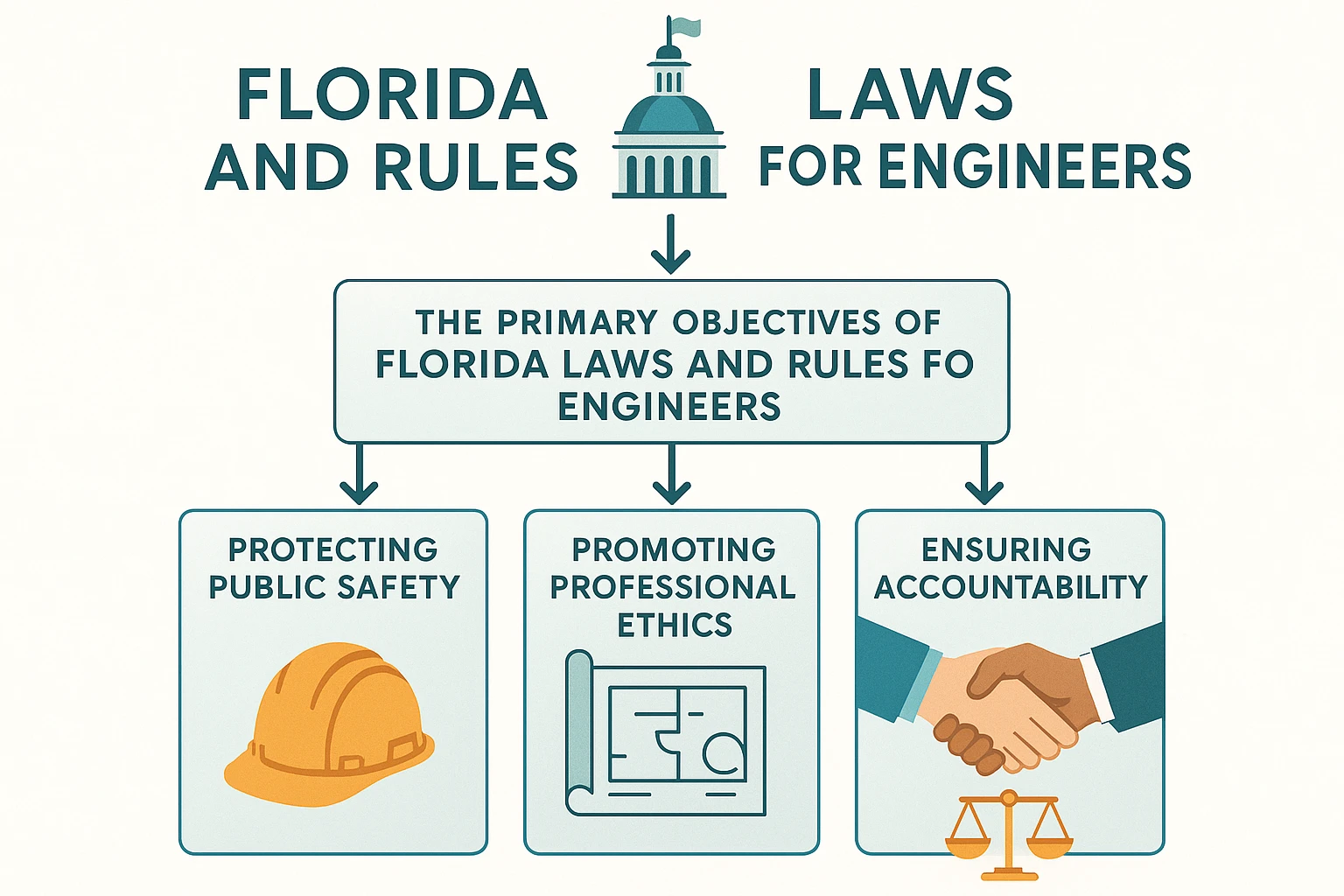
Engineering is a regulated profession because unsafe or careless work can cause serious harm. A design error, incomplete review, missed code issue, or improper seal can affect workers, building occupants, motorists, homeowners, public agencies, and businesses. Florida uses laws, rules, licensure, education requirements, and enforcement to reduce those risks.
Florida engineering laws define who may practice engineering and what responsibilities come with an engineer license. State rules also explain how professional engineers should handle documents, supervision, renewal, discipline, and conduct. These standards support a safer environment for the public and give engineers a clear structure for professional decision-making.
The Florida Board of Professional Engineers helps regulate the profession by applying statutes and administrative rules. Its role is not limited to license approval. The board also oversees continuing education, complaints, discipline, and requirements tied to responsible practice.
For practicing engineers, the Laws and Rules course keeps legal responsibilities visible. It reminds licensees that professional duties are not limited to calculations or technical plans. Engineers must also understand when a seal is appropriate, what professional conduct requires, how continuing education works, and how Florida statutes affect day-to-day practice.
These rules also protect the profession. When every licensed engineer is held to shared standards, clients and the public can place greater trust in engineering work. That trust supports the value of the PE license and helps distinguish qualified professionals from unlicensed or unaccountable providers.
Engineering Laws, Ethics, and Professional Conduct
Florida Laws and Rules training connects directly to ethics. Legal compliance and ethical conduct often overlap because both focus on responsible decision-making. Engineers are expected to protect the public, communicate honestly, avoid misrepresentation, and perform work only within areas of competence.
Professional conduct matters because engineers often face pressure. A client may want faster approval, a contractor may request a shortcut, or a project team may push for reduced review. A professional engineer who understands Florida laws and board rules is better prepared to respond with confidence and protect the integrity of the work.
The Laws and Rules requirement helps engineers familiarize themselves with topics such as:
- Standards for licensure and renewal.
- Board authority and disciplinary procedures.
- Signing and sealing responsibilities.
- Continuing education requirements.
- Professional conduct and ethical obligations.
- Firm and practice-related responsibilities.
- Rules regulating engineering services in Florida.
Ethics training supports a similar goal. It helps engineers think through conflicts of interest, public welfare, confidentiality, honest reporting, and responsible communication. Together, laws, rules and ethics help engineers move beyond minimum technical work and apply sound professional judgment.
This is especially valuable for engineers who supervise teams or manage firms. A licensed PE may be responsible for reviewing work prepared by others, maintaining quality control, training staff, and making sure documents are properly handled. The more clearly the engineer understands state rules, the easier it is to build procedures that reduce risk.
PDH-Pro’s Florida Laws and Rules course is designed to help engineers connect board requirements to real professional situations. The course supports renewal while helping PEs refresh the knowledge they need to practice with confidence.
Continuing Education Requirements for Florida PEs
Continuing education is one way Florida keeps licensed engineers current. The state requires professional engineers to complete continuing education during each renewal cycle. Within that requirement, all Florida PEs must complete one hour related to Florida Laws and Rules from a Board-approved provider.
That hour is required because legal and regulatory knowledge can fade over time. Engineers may be focused on technical work, project deadlines, management responsibilities, or client needs. The renewal process brings attention back to the rules that govern the license.
Florida’s PE continuing education requirements include several types of learning. The Laws and Rules hour focuses on statutes and board rules. Ethics training focuses on professional responsibility. Area-of-practice hours keep engineers aligned with their discipline. Additional engineering-related hours support broader professional knowledge.
| Requirement Area | Purpose | How PDH-Pro Helps |
| Florida Laws and Rules | Reviews statutes, board rules, licensure duties, and regulatory expectations | Offers Board-approved Laws and Rules training for Florida PEs |
| Professional ethics | Supports responsible decisions, public welfare, and honest practice | Provides ethics courses that fit renewal planning |
| Area of practice | Keeps engineers current in their technical field | Offers discipline-relevant online engineering courses |
| Engineering-related hours | Supports broader professional growth and renewal compliance | Provides flexible PDH options and completion certificates |
| Documentation | Helps engineers maintain proof for renewal and board review | Gives access to course completion records and certificates |
A smart renewal plan starts early. Engineers should not wait until the renewal deadline is close to complete training. Finishing the Laws and Rules course early gives time for provider reporting, record review, and any needed corrections.
Florida Laws and Rules course completion is reported by the provider, but engineers should still verify that the course appears correctly in the licensing system. Other continuing education may need to be reported through the required tracking process. Keeping a clean record of course titles, dates, providers, and hours helps avoid confusion.
PDH-Pro helps engineers complete Florida PE education requirements with online access, self-paced courses, live options when available, and immediate certificates after completion. This makes renewal planning easier for engineers with demanding work schedules.
Why Laws and Rules Matter in Daily Engineering Practice
Some engineers think of the Laws and Rules course as a renewal task, but the subject reaches into everyday practice. Florida engineering laws affect how engineers represent qualifications, supervise work, document decisions, and manage responsibility for sealed plans and reports.
The engineer’s seal is a strong example. When a professional engineer signs and seals engineering documents, the PE is taking responsibility for the work under Florida requirements. That action carries legal and professional meaning. Knowing the rules helps engineers avoid improper sealing, unclear responsibility, or document practices that could create board concerns.
Laws and rules also guide responsible charge. A PE should understand what level of direction, control, and review is expected when work is prepared under their supervision. This matters in firms where project teams include interns, designers, technicians, and other professionals.
For firms, training helps create consistent internal procedures. When multiple engineers and staff members understand Florida state rules, a firm is less likely to mishandle documents, miss renewal requirements, or overlook compliance issues. Good training supports better project delivery and protects the business.
Helpful compliance habits include:
- Review Florida Board updates before each renewal cycle.
- Complete Laws and Rules training early in the renewal period.
- Keep ethics and technical PDH records in one digital folder.
- Verify course completion and provider reporting.
- Train staff on sealing, document control, and responsible charge.
- Check license status before signing contracts or submitting documents.
- Use a trusted provider for Florida PE continuing education.
These habits do not need to be complicated. A simple checklist, organized records, and a dependable course provider can help engineers stay ready. PDH-Pro gives engineers access to Florida-specific training and certificates that support this routine.
PDH-Pro Training for Florida Engineering Compliance
PDH-Pro helps Florida engineers meet continuing education requirements without adding unnecessary stress to the renewal process. The platform is built for working professionals who need convenient access, clear course options, and completion records they can save.
The Florida Laws and Rules course is especially useful for PEs who want to refresh their understanding of board requirements. It helps engineers review the legal structure behind licensure, renewal, and professional practice. Combined with ethics and technical coursework, it supports both compliance and better professional judgment.
PDH-Pro is a good fit for engineers who need:
- Florida Laws and Rules training.
- Ethics coursework for renewal.
- Online PDH courses that fit a busy schedule.
- Completion certificates for renewal records.
- State-focused course options from an approved provider.
- A simple way to plan the required hours before the deadline.
Engineers who manage teams may also use PDH-Pro as part of a firm-wide training plan. Encouraging staff to complete required courses early can reduce last-minute issues and help firms keep licensed professionals in good standing.
The goal is not only to meet a requirement. The goal is to help engineers stay current, confident, and prepared to practice responsibly in Florida.
Stay Current With Florida Laws and Rules
Florida Laws and Rules is required for engineers because licensure carries ongoing responsibility. PEs need current knowledge of state requirements, professional conduct, board rules, ethics, renewal obligations, and safe practice standards. That knowledge helps protect the public, the engineer’s license, and the reputation of the profession.
PDH-Pro makes it easier to meet the Florida Laws and Rules requirements with online training designed for professional engineers. Engineers can complete the required education, save certificates, and plan renewal hours without waiting until the deadline.
Review your current renewal needs, complete your Florida Laws and Rules course, and choose PDH-Pro courses that support your license, your practice, and your professional growth.