
Engineers need ethics continuing education because their decisions affect public safety, property, infrastructure, budgets, environmental outcomes, and public trust. A professional engineer may be responsible for work that supports bridges, buildings, roadways, water systems, energy systems, industrial facilities, and other projects people rely on every day.
A common question is why do engineers need ethics continuing education if they already passed exams, earned licensure, and follow professional standards at work. The reason is that ethical challenges do not stop after a license is issued. New technologies, changing regulations, project pressures, client expectations, and public safety concerns continue throughout an engineering career.
Ethics training helps professional engineers strengthen judgment, recognize conflicts, understand obligations, and apply engineering ethics in real project situations. It also helps engineers meet continuing education requirements for license renewal. PDH-Pro supports those needs with online ethics courses, state-specific PDH options, and flexible learning formats designed for busy engineering professionals.
Ethics Training and the Duty to Protect Public Health Safety
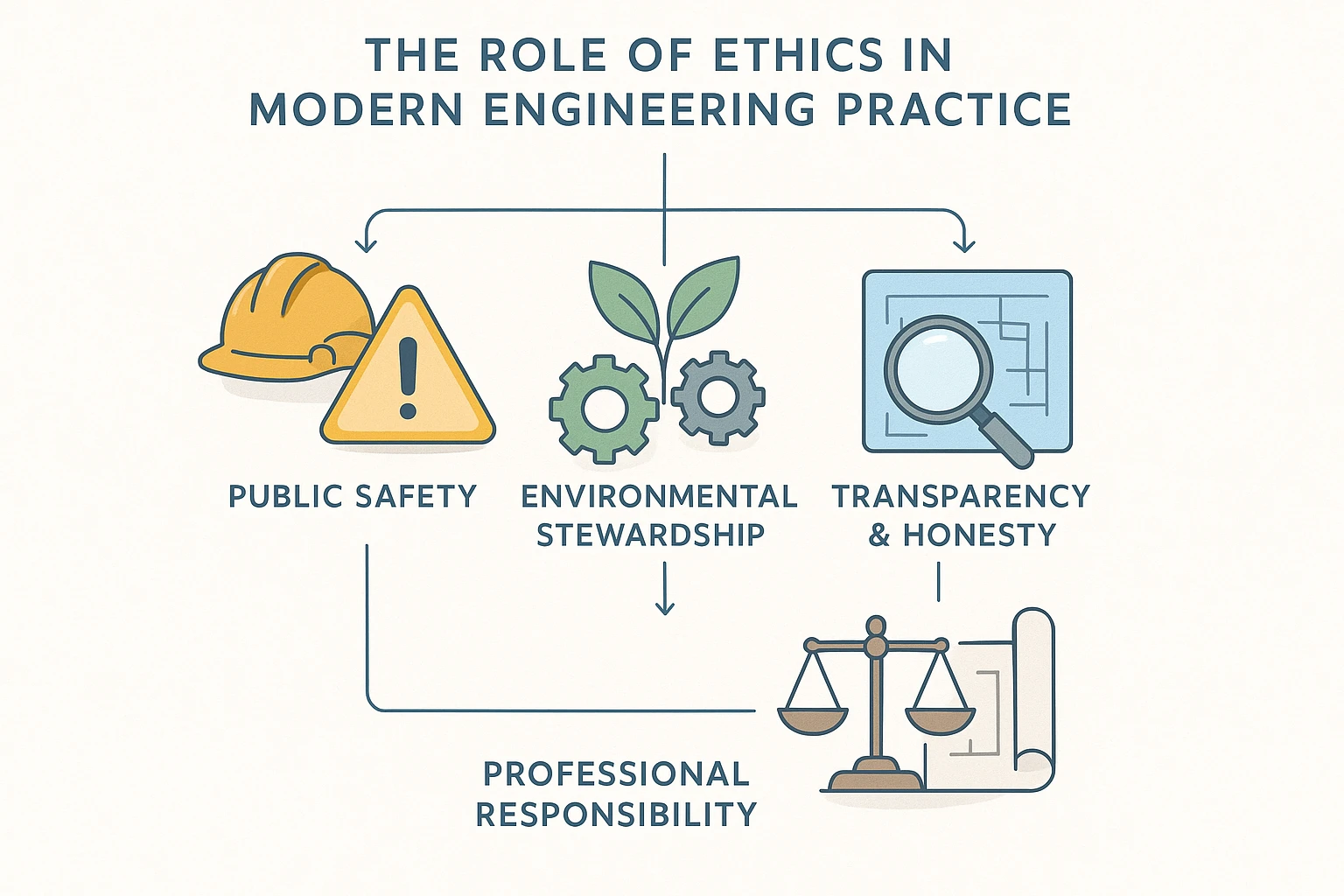
Engineering is built on responsibility. When engineers approve plans, evaluate risks, manage designs, or advise clients, their work can affect people who never meet them. A structural detail, drainage decision, equipment specification, or construction review may influence whether a system performs safely over time.
That is why ethics is critical to the profession. Technical knowledge helps engineers solve problems, but ethical judgment helps them decide what should be done when safety, cost, schedule, and client expectations compete. The public expects engineers to protect welfare even when that decision is difficult or unpopular.
Ethics continuing education keeps that obligation visible. It reminds licensees that professional duty includes honesty, accountability, competence, transparency, and public protection. A course may review professional codes, disciplinary cases, conflicts of interest, responsible charge, communication duties, or common situations where engineers have to make careful decisions.
Professional ethics also supports public trust. Most people cannot review engineering calculations or evaluate design assumptions themselves. They rely on licensed professionals, firms, regulators, and state boards to maintain standards. Ethics training reinforces the behaviors that support that trust.
Common ethical issues in engineering may involve:
- Approving work outside an engineer’s area of competence.
- Signing or sealing documents without proper review.
- Ignoring a known safety concern because of schedule pressure.
- Misrepresenting qualifications or project experience.
- Failing to disclose a conflict of interest.
- Allowing incomplete documentation to move forward.
- Letting cost pressure outweigh public welfare.
Ethics courses help engineers slow down, identify these risks, and choose a professional response. That value reaches beyond compliance. It supports safer projects, clearer communication, and stronger professional credibility.
PDH-Pro provides ethics training designed for engineers who need practical instruction they can apply to real work. Online courses make it easier to meet continuing education requirements while refreshing the judgment skills that support responsible practice.
Continuing Education Requirements for Professional Engineers
Continuing education requirements are set by state licensing boards, and each state may define ethics training differently. Some boards require a specific ethics hour during each renewal cycle. Others include ethics within broader professional development requirements. Engineers licensed in multiple states should review every board rule before selecting courses.
For Florida professional engineers, the requirement is part of the 18-hour continuing education cycle. Each biennium includes one hour related to professional ethics, one hour in Florida Laws and Rules, four hours in the licensee’s area of practice, and the remaining hours related to engineering practice.
This structure shows why ethics is treated as a required part of renewal. The board expects engineers to maintain both technical competence and professional judgment. A licensee may be highly skilled in design or analysis, but still needs regular exposure to current ethical expectations, rules, and examples.
Continuing education also helps engineers stay ready for changes in the profession. New software, artificial intelligence tools, environmental concerns, delivery methods, and project management models can create new ethical questions. The right training helps engineers think through those changes in a structured way.
Engineers should view ethics education as part of a larger renewal plan. A smart plan includes confirming the state requirements, choosing courses that count, finishing work before the deadline, saving certificates, and reporting hours correctly when required.
The table below shows how ethics fits into a typical PE continuing education plan.
| Continuing Education Area | Purpose | Why It Matters |
| Professional ethics | Builds judgment around responsibility, conflicts, honesty, and public welfare | Helps engineers make sound decisions under pressure |
| State laws and rules | Reviews legal duties, board rules, and license requirements | Supports compliance with state-specific obligations |
| Area of practice | Keeps engineers current in their technical discipline | Supports competent engineering work |
| General engineering topics | Expands knowledge related to engineering practice | Supports professional growth and renewal |
| Documentation | Provides proof of completed education activities | Helps with audits, reporting, and license renewal |
PDH-Pro helps engineers meet education requirements with online PDH courses, ethics options, and state-specific packages. Engineers can select courses that align with renewal needs and download completion certificates for their records.
Engineering Ethics in Real Project Decisions
Ethics training matters because engineering decisions are rarely made in perfect conditions. Engineers often work under deadlines, budget limits, changing project scopes, incomplete information, and pressure from clients or stakeholders. These pressures can make ethical choices harder.
A professional engineer may need to speak up when a design does not meet safety expectations. Another may need to refuse to seal a document that was not properly reviewed. A project manager may need to disclose a conflict, correct an error, or explain a technical risk to a client who wants a faster answer.
Ethics continuing education gives engineers a framework for those moments. It does not replace experience, but it helps organize decisions around professional duties. Training may use case studies, board disciplinary actions, codes of conduct, or practical scenarios to show how ethical principles apply to real projects.
Engineering ethics also supports better communication. Many ethical problems become worse when risks are not documented or concerns are not shared clearly. Training helps engineers understand the value of written records, transparent recommendations, and timely communication with clients, agencies, and team members.
Professional judgment is especially important in leadership roles. Engineers who supervise others set expectations for quality, review, documentation, and reporting. If leaders treat ethics as a routine part of practice, teams are more likely to raise concerns early and handle problems responsibly.
Ethics training can help engineers:
- Recognize conflicts of interest before they affect a project.
- Communicate risks clearly to clients and decision-makers.
- Protect public welfare when schedule or cost pressure increases.
- Understand when work requires further review.
- Apply professional codes to everyday decisions.
- Document concerns and decisions in a defensible way.
- Build a stronger culture of accountability within a firm.
PDH-Pro’s ethics courses are designed to support these practical needs. Engineers can use the training to satisfy renewal requirements while building habits that improve project decision-making.
Compliance, License Renewal, and Documentation
Ethics continuing education also matters because it supports compliance. Licensing boards may require proof that a professional engineer completed the right education during the correct renewal period. If records are missing or a course does not count, renewal may become more complicated.
Engineers should keep documentation for every completed course. A certificate should show the course name, provider, completion date, number of PDH hours, and topic. When available, engineers should also keep course descriptions or transcripts, especially if a board may review whether a course qualifies as ethics.
Florida professional engineers report continuing education through the required tracking process and should retain records according to board guidance. Other states may have different reporting systems or record retention rules. Multi-state licensees need to stay organized by state and renewal cycle.
Good documentation habits include saving certificates immediately, naming files clearly, keeping a renewal folder, and checking totals well before the deadline. Engineers should not rely only on purchase receipts or registration confirmations. A receipt does not prove completion.
A simple ethics compliance workflow may look like this:
- Check your state licensing board’s ethics requirement.
- Choose a course that clearly addresses engineering ethics.
- Complete the course within the correct renewal period.
- Download the completion certificate.
- Save the certificate in a renewal folder.
- Report the course if your board requires reporting.
- Keep the record in case of audit or review.
PDH-Pro makes this process easier by providing online access to courses and completion certificates. Engineers can fit training around project schedules, complete ethics PDH before the renewal period closes, and keep records ready for reporting.
Choosing High-Quality Ethics Courses
Not every professional development course will satisfy an ethics requirement. Engineers should choose training that clearly addresses ethics in the context of engineering practice. The best courses connect principles to real decisions, professional codes, public safety, and board expectations.
A strong ethics course should be relevant, current, clearly documented, and suitable for professional engineers. It should help licensees understand how ethical issues appear in design, consulting, supervision, communication, project management, and responsible charge.
When selecting a course, engineers should confirm:
- The course is intended for professional engineers.
- The topic clearly focuses on ethics or professional responsibility.
- The PDH value is stated before enrollment.
- The provider supplies a completion certificate.
- The course format is accepted by the relevant licensing board.
- The content fits the renewal period and state requirements.
- The provider offers support if documentation questions come up.
PDH-Pro offers engineering ethics courses in flexible formats, including self-paced options and webinars. This helps engineers choose training that fits their schedule and renewal needs. Engineers can also pair ethics coursework with technical and state-specific courses to complete a broader continuing education plan.
High-quality ethics training should not feel disconnected from practice. The best learning helps engineers think more clearly about the choices they make in meetings, design reviews, field decisions, reports, and client communication.
Build Ethics Training into Your Professional Development Plan
Ethics continuing education helps engineers protect the public, maintain professional trust, meet licensing board requirements, and strengthen decision-making throughout their careers. It is not only a renewal task. It is a practical tool for safer, clearer, and more responsible engineering practice.
Engineers should review their state education requirements early, choose ethics courses that count, and keep documentation organized before renewal deadlines approach. For Florida PEs, one hour of professional ethics is part of the 18-hour biennial continuing education requirement.
PDH-Pro helps engineers meet continuing education requirements with flexible online ethics courses, state-specific packages, and certificates that support renewal records. Review your current license needs, choose the ethics training that fits your state, and complete your required PDH before the deadline creates pressure.