
Written by: Jordan Ellis
Published: September 21, 2024 | Updated: September 1, 2026
Introduction: How to Become a Mechanical Engineer
Mechanical engineering is at the heart of innovation, shaping the world through design and problem-solving. From creating the engines that power our cars to developing cutting-edge technologies in renewable energy, mechanical engineers play a pivotal role in shaping modern life. For those passionate about turning ideas into reality, this career offers immense rewards—both intellectually and professionally.
Whether you’re a student considering mechanical engineering or a professional looking to advance, this guide will walk you through the steps, from education to licensing, and provide insights into the skills and opportunities this dynamic field offers.
Related Articles:
What Does It Take to Become an Electrical Engineer
What Does It Take to Become a Petroleum Engineer
What Do Mechanical Engineers Do?
Mechanical engineers are the innovators behind a vast range of systems and devices that power our everyday lives. They design, build, and improve everything from engines and generators to air conditioning systems and robotics. Their work often begins with analyzing a problem and developing solutions through prototype design and testing.
Mechanical engineers also play a key role in industries such as automotive, manufacturing, and renewable energy. As problem solvers, they help advance society’s infrastructure. In fact, engineering itself is fundamental to society’s progress, as explored in this article on the importance of engineering in our daily lives. Their expertise ensures that machines run efficiently, integrating mechanical, electrical, and thermal elements into cohesive systems that we depend on.
Educational Requirements for Mechanical Engineers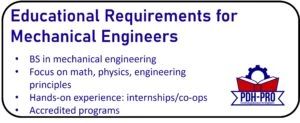
To become a mechanical engineer, a bachelor’s degree in mechanical engineering or mechanical engineering technology is essential. Accredited programs cover fundamental topics like mathematics, physics, and engineering principles, alongside specialized courses in thermodynamics, fluid mechanics, and machine design. Many programs offer hands-on experience through internships or cooperative education programs, giving students practical insights into the field.
Additionally, to become licensed, many engineers complete the Fundamentals of Engineering (FE) exam, which is often followed by the Professional Engineer (PE) exam after gaining work experience.
How to Become a Licensed Professional Mechanical Engineer
Becoming a licensed Professional Engineer is a significant milestone for mechanical engineers, especially those looking to advance their careers or take on leadership roles. The process begins with earning a bachelor’s degree from an ABET-accredited program. After graduation, aspiring engineers must pass the Fundamentals of Engineering (FE) exam, which certifies them as an Engineer-in-Training (EIT) or Engineer Intern (EI). It’s important to have a proper engineering degree from an accredited university.
Once you’ve gained a minimum of four years of supervised work experience, you’re eligible to take the PE exam. This rigorous test evaluates your competence and ability to practice mechanical engineering at a professional level. Upon passing, you’ll receive your PE license, allowing you to legally offer engineering services to the public, take on more responsibility in your projects, and open doors to new career opportunities.
Licensure isn’t just about following regulations – it’s a mark of distinction that showcases your expertise and commitment to the field. It also ensures you meet the ethical and technical standards necessary for protecting public safety, which is at the core of every engineering discipline.
What Do You Study in a Mechanical Engineering Degree Program?
A bachelor’s degree is the typical educational starting point for someone entering mechanical engineering. Students usually study mathematics, physics, engineering principles, thermodynamics, fluid mechanics, materials, manufacturing, controls, and machine design. Laboratory courses and design projects provide opportunities to apply those concepts to practical problems.
An engineering degree also develops skills that go beyond calculations. Students learn how to analyze a design problem, compare alternatives, model components, evaluate performance, document results, and communicate technical recommendations.
Many mechanical engineering programs incorporate computer-aided design, simulation, programming, and hands-on laboratory work. Students may also participate in senior design projects where teams develop and test a product or system from concept through final design.
A bachelor’s degree is sufficient for many entry-level jobs. A master’s degree may be useful for engineers who want deeper expertise in areas such as robotics, thermal sciences, advanced manufacturing, controls, or research.
Mechanical Engineer Salaries and Earning Potential
Mechanical engineering offers a strong earning potential, with salaries varying based on factors such as industry, location, and level of experience. According to recent data, the median annual wage for mechanical engineers in the U.S. is around $104,110. Entry-level positions typically offer competitive starting salaries, and as engineers gain experience, especially with a PE license, their earning potential significantly increases. Those working in specialized sectors, such as oil and gas or advanced manufacturing, often earn higher-than-average wages.
With opportunities to work across diverse industries, mechanical engineers enjoy robust career growth, and further education or certifications can open the door to even higher earning potential.
The following table provides a breakdown of salary information for mechanical engineers based on recent jobs data:
| Industry | Average Annual Salary |
| Overall U.S. Average | $105,426 |
| Motor Vehicles & Equipment Manufacturing | $96,420 |
| Architectural & Engineering Services | $102,290 |
| Oil and Gas Extraction | $158,000 |
| Internet Publishing & Web Search Portals | $247,240 |
| Highest-Paying State (Alaska) | $147,363 |
| California | $126,972 |
| District of Columbia | $125,555 |
These figures show significant earning potential, especially for those working in specialized industries such as oil and gas or cutting-edge technology fields. The highest salaries are found in states like Alaska and California, reflecting the demand and cost of living in these regions.
Continuing Education Opportunities for Mechanical Engineers
As a professional mechanical engineer, staying up-to-date with the latest industry standards, technologies, and best practices is essential. Whether you’re looking to maintain your PE license or simply enhance your skills, our comprehensive suite of continuing education courses is designed to meet your needs. We offer over 40 courses tailored specifically for mechanical engineers, ranging from live webinars led by industry experts to self-directed courses that allow you to learn at your own pace.
Our course offerings include topics such as advanced thermodynamics, HVAC system design, renewable energy, and cutting-edge innovations in mechanical systems. These courses not only provide valuable professional development hours (PDH) but also keep you informed about the latest trends and regulations in mechanical engineering.
With options for live interaction through webinars, convenient recorded sessions, and flexible self-directed learning, there’s a course format to fit every schedule. Whether you’re a seasoned engineer or just starting your career, these courses will help you stay ahead in this ever-evolving field. Explore our catalog to find the course that best suits your professional development needs.
Professional Growth and Advancement Opportunities
Mechanical engineers enjoy a wide range of career paths and advancement opportunities. Early in your career, you may start as an entry-level engineer, working on design, testing, or production. Over time, with experience and continued education, you can take on more responsibilities, leading to roles such as project manager, team leader, or department head. A Professional Engineer license is a critical milestone for career advancement, enabling you to oversee public projects, sign off on designs, and lead engineering teams.
For those interested in more specialized fields, additional certifications in areas like HVAC systems, automotive design, or robotics can further enhance career prospects. Mechanical engineers can also transition into senior roles such as engineering directors, consultants, or technical experts in niche industries.
Further education, such as a master’s degree or MBA, can lead to executive positions, including Chief Engineer or even roles in management, blending engineering expertise with business acumen. Mechanical engineers who remain engaged in ongoing learning and adapt to emerging technologies, like renewable energy or automation, will find numerous opportunities to grow throughout their careers.
Skills Mechanical Engineers Need
Successful mechanical engineers combine technical knowledge with analytical and communication skills. Design is a major part of the profession, so engineers must be able to translate a problem or performance requirement into a practical solution.
Important technical abilities can include computer-aided design (CAD), engineering analysis, mathematics, materials selection, manufacturing processes, testing, and data interpretation. Depending on the job, an engineer may also use simulation software, programming tools, or specialized analysis methods.
Problem solving is equally important. Mechanical engineers frequently evaluate why equipment is not performing as intended, identify potential improvements, compare alternatives, and determine whether a proposed design is practical and safe.
Communication skills matter as well. Engineers routinely explain technical information to clients, managers, technicians, contractors, and professionals from other disciplines. A good design has limited value if the engineer cannot clearly document the assumptions, calculations, drawings, and recommendations behind it.
This section is almost tailor-made for your POP deficits.
And it improves the article for the human visitor, which is more important than merely manipulating the score.
BLS specifically highlights creativity, math, mechanical aptitude, listening, and problem-solving as important attributes for mechanical engineers.
Common Mechanical Engineering Jobs and Specialties
A mechanical engineering degree can lead to jobs across a surprisingly broad range of industries. Mechanical engineers work in manufacturing, energy, transportation, consulting, building systems, automation, product development, and research.
Some specialize in HVAC and thermal systems, while others focus on manufacturing equipment, automotive design, robotics, energy systems, or aerospace applications. Engineers may also move into project management, reliability, operations, technical consulting, or engineering management as their responsibilities increase.
The breadth of the discipline is one reason mechanical engineering remains attractive to students who want flexibility. The same foundation in mathematics, physics, analysis, and design can be applied to many different products and industries.
The Licensing Challenge: Passing the Engineering Exam
When you start your career path as an aspiring mechanical engineer, you’ll correctly focus on getting that crucial degree. But a diploma doesn’t make you a licensed professional engineer. Becoming a true licensed engineer requires navigating a multi-stage process governed by your state board.
The first major hurdle is the Fundamentals of Engineering Exam (FE Exam). This comprehensive engineering exam validates your foundational technical knowledge. Passing the FE allows you to become an Engineer in Training (EIT), which is your formal entry into the post-graduate licensing process. We see too many talented individuals delay this step, but I can’t stress enough how vital it is. You’ll find that many of the best job opportunities and accelerated career tracks within engineering firms are reserved for those who have at least attained EIT status.
The ultimate goal, of course, is attaining your engineer license – the PE credential. Achieving your PE requires meeting licensing requirements that typically include passing a second, more difficult principles and practice of engineering exam (the PE Exam). This credential is required for holding responsible charge of engineering projects and is the key differentiator for engineering managers and principals in the engineering field.
Beyond the Classroom: Why Work Experience Defines Your Mechanical Skills
While securing a four-year degree in mechanical engineering is your foundation, the true test of your competency lies in work experience. This is where your classroom knowledge transforms into practical, marketable skills mechanical employers are looking for.
In the engineering field, the importance of supervised, professional work cannot be overstated. You’ll need specific experience to sit for the final engineering exam. This work experience – typically four years under the direct supervision of a licensed PE – is often the longest, most challenging phase of the entire career path. This practical, hands-on training teaches you the non-academic aspects of the job: project management, budget control, and compliance. We look for candidates who have taken initiative early in their career by pursuing summer internships or co-op programs; that kind of experience demonstrates true commitment to the profession. It proves that you’ve got the skills necessary to succeed when the complexity of real-world systems comes into play.
Final Take – Get Your Engineer License
Becoming a mechanical engineer is a rewarding journey filled with opportunities for growth, innovation, and professional advancement. With a solid educational foundation, key technical and analytical skills, and the pursuit of licensure, mechanical engineers can make a significant impact across various industries. Whether you’re designing cutting-edge technologies or leading engineering teams, the field offers diverse career paths that can lead to leadership roles or specialization in advanced sectors. Continuous learning and adaptability are key to long-term success in this ever-evolving profession.