
Webinar: Designing for Acoustics
Scheduled: Wednesday, May 20, 2026, 10:00 am – 12:00 pm ET (9:00 pm CT / 8:00 pm MT / 7:00 pm PT)
 Author: Paul Spite
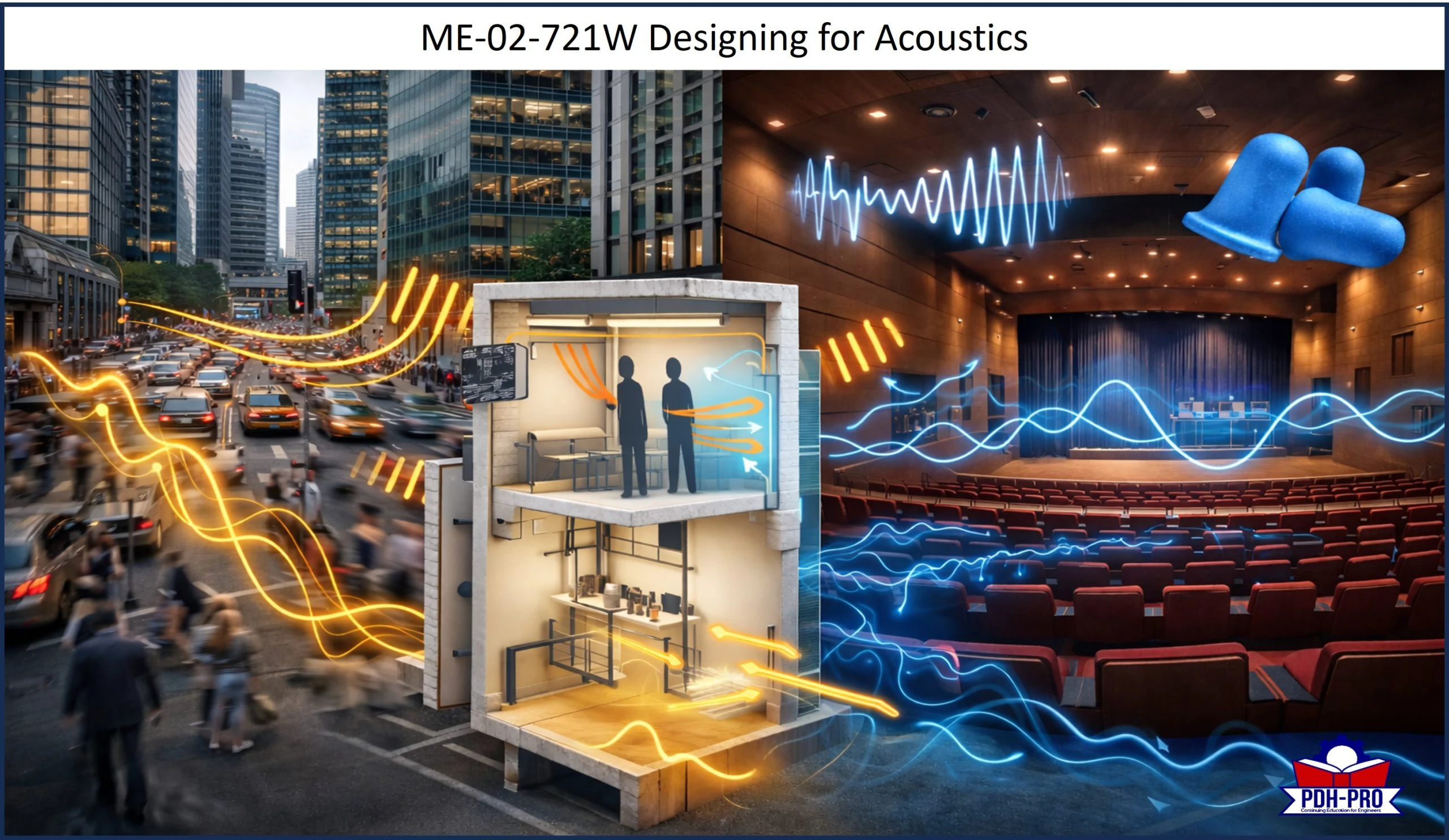
Since unwanted sound impacts and affects inhabitants of our built environments, controlling noise is swiftly becoming a mandated concern. In this overview of acoustics, principles of sound transfer are laid out, as well as design methods used to control the production, transmission, and reduction of noise. This is discussed in general and a specific building type.
Participants will learn to identify the terminology and principles governing how sound is generated, moves through matter, and is modified. The presentation explains how acoustic designs are implemented and describes how sound behaves while moving from a source to a receiver. Attendees will explore basic design practices for effectively controlling sound transfer between exterior and interior environments, controlling the reverberation of sound within spaces, and containing noise transfer between adjacent spaces. Finally, the course defines basic methods and ramifications of artificially amplifying sound and discusses design objectives to recommend best acoustic practices for basic building occupancies.
Target Audience: This course is intended for all engineering disciplines, especially professionals who specify machinery, designs site layouts, or develops industrial processes. It is highly relevant for architectural, mechanical, and civil engineers responsible for implementing noise control methods in building envelopes, structural partitions, and HVAC systems.
Learning Objectives
This Live Webinar course is intended to provide you with the following specific knowledge and skills:
- Identify terminology and principles governing how sound is generated, moves through matter, and is modified.
- Explain how acoustic design is implemented.
- Describe how sound behaves while moving from a source to a receiver.
- Identify basic design practices for effectively controlling sound transfer between exterior and interior.
- Implement basic design practices for effectively controlling the reverberation of sound within spaces.
- Recognize basic design practices for containing noise transfer between adjacent spaces.
- Define basic methods and ramifications of artificially amplifying sound.
- Discuss design objectives and recommend best acoustic practices for basic building occupancies.
Note: This is a live webinar delivered via GoToMeeting. Login instructions will be emailed to you 24-48 hours prior to the webinar and the morning of the webinar. If you have not received your instructions for any reason, please call customer support the day of the event. Webinars are live and interactive, and students will have the ability to directly interact with and ask questions of the presenter.
We provide technical courses for PDH credits that meet Board requirements for Professional Engineers, Geologists and Land Surveyors. This course is guaranteed to be accepted in AK, AL, AR, DE, FL, GA, IA, ID, IL, IN, KS, KY, LA, MD, ME, MI, MN, MO, MS, MT, NC, ND, NH, NJ, NM, NV, NY, OH, OK, OR, PA, SC, SD, TN, TX, UT, VA, VT, WI, WV, and WY. Before purchasing this course, please confirm that your state Board is listed above.


